Buyer questionsFurther questions about pouches and bags.
The pack-opening, filling, settling and sealing sequence should be tested with the actual powder and packaging material.
Why must the pouch filling and sealing sequence be tested together?
The pouch filling and sealing sequence must be tested together because seal quality depends on what happens before the sealing jaws close. Dose trajectory, displaced air, settling time, pouch support and transfer can place fine powder in the seal area even when the sealer itself is correctly set.
Test production-intent powder and pouches through the planned cycle, then inspect seal cleanliness and strength using the site-approved method. A separate guide explains how to diagnose and reduce powder reaching the seal area.
Protect the pouch seal area →What is different about VFFS and premade pouch trials?
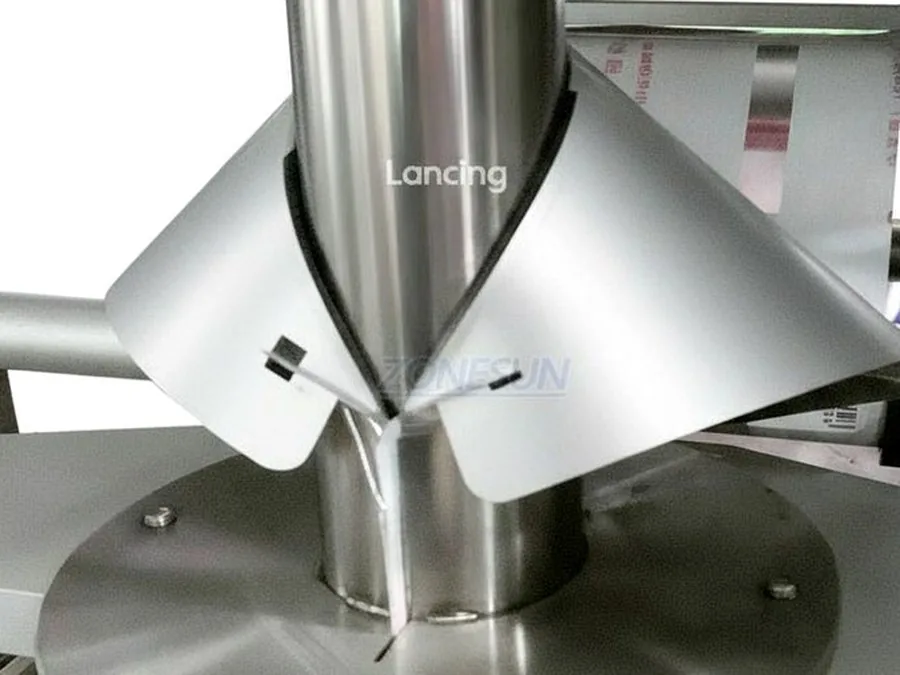
A VFFS trial must prove film unwinding, forming, registration, dosing, bag length and sealing in one continuous cycle. A premade-pouch trial instead focuses on pouch feeding, opening, gripping, filling access, transfer and final sealing. Both need the real powder, but the packaging-handling risks are different.
Do not assume success in one format transfers directly to the other. Use the selected production material and the intended bag or pouch dimensions.
Compare VFFS and premade pouches →Which pouch samples should be supplied for testing?
Supply production-intent pouches covering the smallest, largest and most difficult formats, together with material specifications and the expected print or registration features. Include normal manufacturing tolerances and enough quantity to test opening, filling, settling, sealing, starts and stops.
For multiple suppliers or constructions, identify each sample clearly. A hand-made prototype may be useful for early access checks but should not replace a machine-made production sample for final acceptance.
Scale trial findings into production →