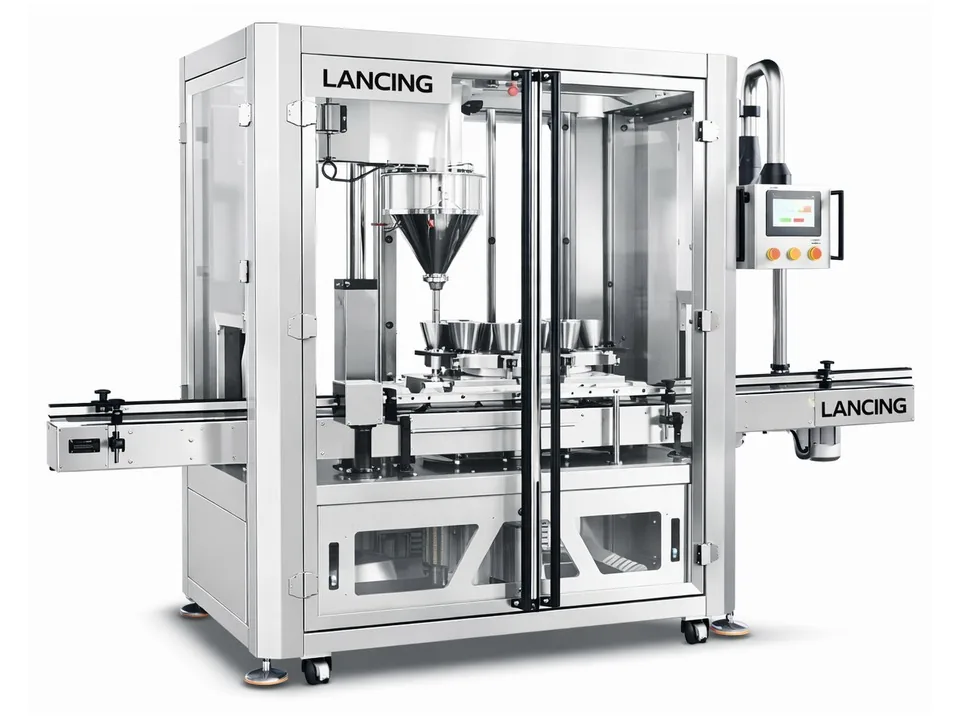
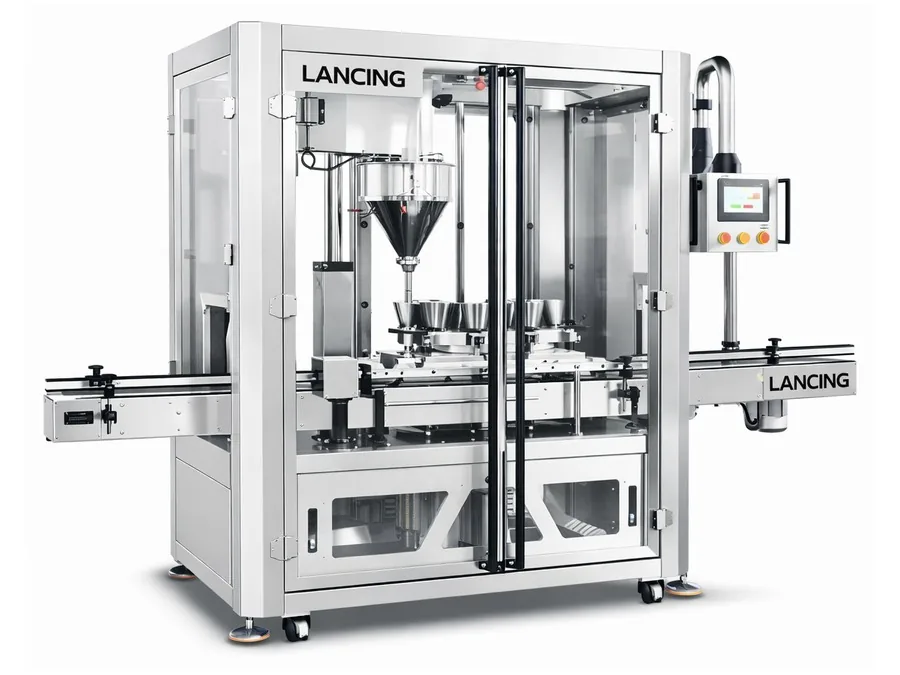
What determines the right container indexing method?
The right container indexing method depends on container stability, spacing, line speed, fill time, nozzle movement and the amount of control needed under the filling head. A simple stop gate may suit stable, well-spaced packs; more demanding applications may need screws, stars, pucks or servo-controlled handling proven with production-intent containers.
Provide container drawings and samples, including the lightest, tallest and least stable formats. Indexing must also coordinate with upstream supply and downstream capping or sealing rather than being selected as an isolated filler accessory.
Review bottle and nozzle access →How should automatic filler recipes and change parts be controlled?
Automatic filler recipes should identify the product, pack, auger tooling, dose settings, agitation, timing and relevant quality checks. Change parts should be clearly identified and stored so operators can match the mechanical setup to the selected recipe. Access levels and change records should reflect the site quality system.
A saved recipe does not remove the need for verification after product, batch, tooling or maintenance changes. The startup procedure should confirm that the installed parts and product condition match the recipe before saleable production begins.
Plan calibration and verification →When should checkweigh feedback be connected to the filler?
Checkweigh feedback should be considered when measured pack weights show a stable trend that can be corrected automatically without chasing random variation. The interface needs agreed averaging, correction limits, alarm handling and a fallback method so a faulty measurement or isolated disturbance does not drive the filler away from a valid setting.
Feedback complements, rather than replaces, stable hopper feed, correct tooling and the packer's approved quantity-control checks. The control philosophy should be reviewed during the line specification and acceptance testing.
Read the checkweighing guide →