Buyer questionsFurther questions about VFFS powder filling.
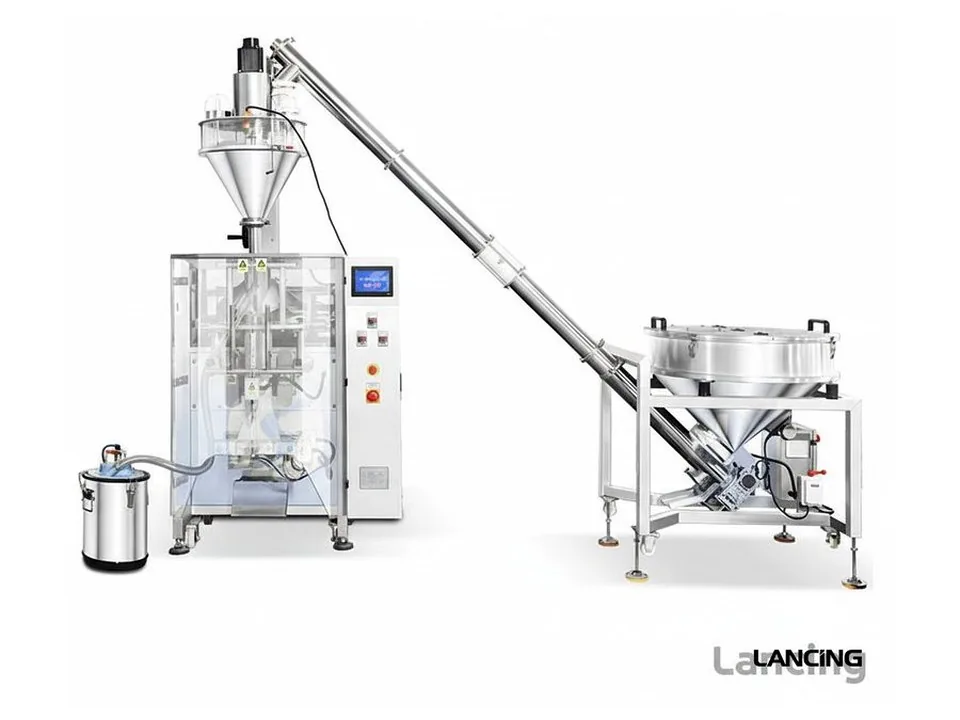
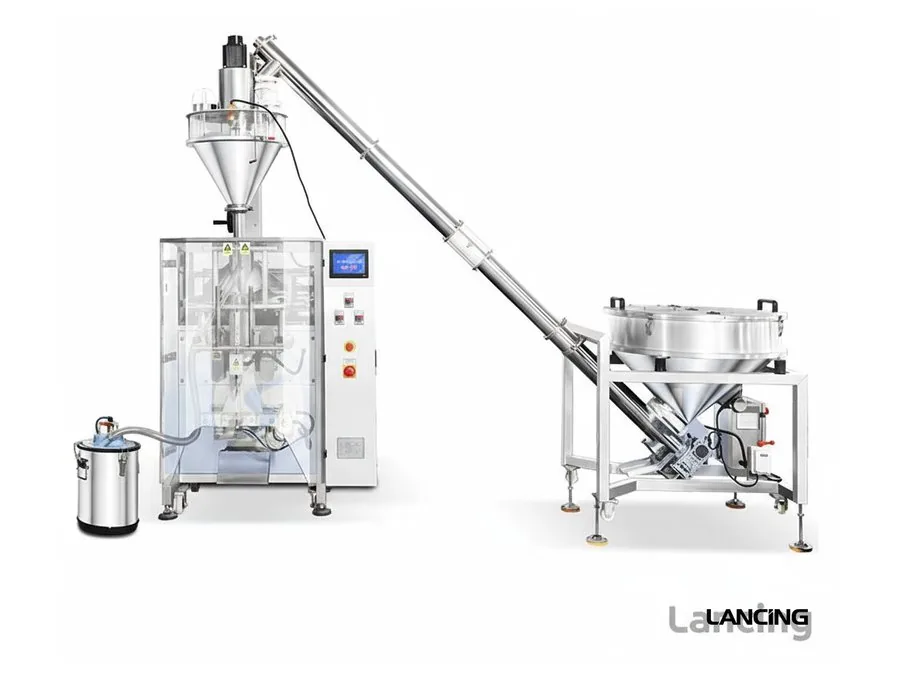
VFFS projects succeed when dosing, film handling, dust control, bag formation and sealing are treated as one timed process.
How is powder prevented from contaminating the VFFS seal?
Powder is kept away from the VFFS seal by controlling the dose path, forming-tube geometry, displaced air, cut-off, bag length and the delay before the jaws close. Local extraction or a dust-removal feature may help, but it must capture airborne fines without removing a meaningful part of the dose or disturbing the film.
The correct settings are product and film dependent. Trial the complete cycle and inspect seals after starts, stops and hopper refills, not only during a short steady run.
Prevent powder in the seal area →Before a VFFS trial, provide the intended film structure, thickness, reel dimensions, print repeat, registration mark, bag width, bag length, seal type and any gusset, perforation or easy-open requirement. The material must be suitable for the chosen sealing system and the product-contact application.
Production-intent reel material is preferable to an unprinted substitute because stiffness, slip, static and registration can change machine behaviour. The packaging supplier should confirm material compatibility and sealing conditions.
Compare VFFS and premade pouches →How is product settling allowed for in a VFFS bag?
Product settling is allowed for by selecting a bag length and fill sequence that accommodate the loose aerated volume while preserving the seal zone. The bag may settle after dosing, vibration, handling or transport, so the finished presentation should be assessed at the relevant points rather than only under the filling tube.
Do not reduce bag length solely from the final settled height. The forming and sealing process still needs enough temporary volume and clearance during filling.
Relate fill weight to pack volume →